

In many Arabic cultural traditions, the chameleon has unfortunately been cast in a negative light. Often used as a metaphor for hypocrisy or deceit, this remarkable creature has been misunderstood and misrepresented for generations.
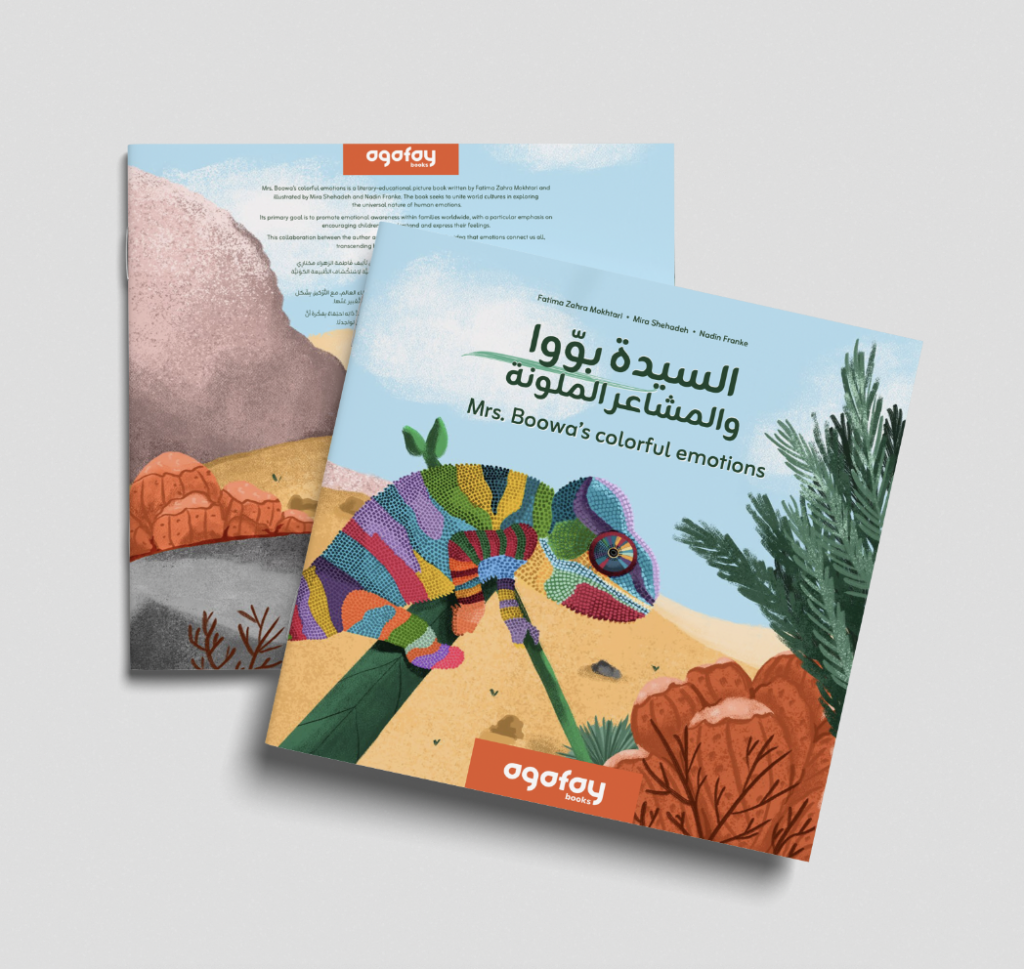
At Agafay Books, we’re on a mission to change this perception with our new children’s book, Mrs. Boowa’s Colorful Emotions.
Breaking Down Cultural Misconceptions
The Arabic word for chameleon, “hirba’a” (حرباء), has become synonymous in some contexts with someone who changes their opinions or behavior to suit different situations; essentially, a hypocrite. This cultural perception fails to recognize the natural wonder of this animal’s remarkable adaptive abilities.
By creating Mrs. Boowa, a wise chameleon who uses her color-changing ability to express emotions, we’re inviting children and parents to see this animal through a lens of scientific understanding rather than cultural prejudice.
A Moroccan Childhood Connection
Interestingly, Moroccan children grow up fascinated by chameleons. These color-changing creatures capture young imaginations across the country, yet rarely do these same children get the opportunity to learn about their own emotions in a structured, supportive way. This disconnect presented both a challenge and an opportunity for Agafay Books.
Moroccan children have a natural curiosity about chameleons, which they often see everywhere in our nature; crossing roads while people are driving, or appearing in the souks inside our medinas. Sometimes, chameleons are even displayed for sale in the souks. Even adults are fascinated; they will pause what they’re doing to watch a chameleon change colors and often invite their children or their grandchildren to enjoy this little ‘show.’ We decided to harness this shared fascination as a gateway to emotional learning; something too often overlooked in traditional education systems.
Science Over Stereotypes
Modern research has revealed that chameleons don’t change color primarily to blend in with their surroundings as commonly believed. Rather, their color transformations are complex responses to signal mood (e.g., aggression, stress, or courtship), temperature changes, and communication needs. When a chameleon feels threatened or scared, its color shift is an emotional response; not unlike how humans might blush when embarrassed or pale when frightened.
“Mrs. Boowa’s Colorful Emotions” uses this scientific reality as its foundation. Throughout the story, Mrs. Boowa’s colors shift as she experiences different feelings; turning bright yellow when happy, deep blue when sad, vibrant red when angry, pink when surprised, and purple when afraid.
Addressing a Gap in Arabic Education
In the Arab world, tremendous emphasis is placed on intellectual development and academic achievement. Children are encouraged to develop their thinking skills, memorization abilities, and logical reasoning. However, emotional intelligence often receives far less attention in traditional educational settings.
“We recognize that our educational systems excel at developing the mind, but sometimes neglect the heart,” explains the author. “At Agafay Books, we aim to help children understand themselves and the adults around them on an emotional level. After exploring Mrs. Boowa’s world, children will be able to more easily define their own emotions, talk about their feelings, and also detect emotions like anger in people around them.”
This practical emotional literacy has immense value in children’s daily lives, helping them navigate social situations with greater confidence and empathy. By giving children the vocabulary to articulate their own feelings, the book empowers them to communicate their needs and experiences more effectively.
Building Emotional Intelligence Through Natural Wonder
By positioning the chameleon as a positive role model for emotional expression, Agafay Books is doing more than correcting a cultural misconception; we’re providing children with a powerful visual metaphor for understanding their own emotions.
“In many traditional Arab households, emotional expression isn’t always openly discussed or encouraged,” The author notes. “By creating a lovable chameleon character who visibly shows her feelings, we’re giving families a gentle entry point into conversations about emotional intelligence.”
The book’s bilingual format in English and Arabic further bridges cultural perspectives, allowing children to develop emotional vocabulary in both languages while appreciating the wonders of the natural world.
A Global Collaboration with Local Roots
The creation of “Mrs. Boowa’s Colorful Emotions” represents a unique cross-cultural collaboration. Palestinian-born artist Mira Shihadeh contributed the expressive human faces that capture emotions, while German illustrator Nadin Franke brought Mrs. Boowa – the chameleon – and the Moroccan desert landscape to vibrant life.
This international team worked together with a shared vision: to celebrate emotional awareness while honoring scientific truth and challenging outdated cultural stereotypes.
Joining Nature’s Wisdom and Emotional Learning
By transforming the chameleon from a symbol of hypocrisy into a guide for emotional expression, Agafay Books invites young readers to approach both nature and their own feelings with curiosity and respect. Mrs. Boowa demonstrates that changing in response to our environment and emotions isn’t deceptive – it’s a natural, healthy adaptation.
In this beautifully illustrated 16-page board book, children discover that, like the chameleon, their emotions are colorful, dynamic, and worthy of expression. And parents, particularly in Arabic-speaking communities, are encouraged to embrace emotional conversations as opportunities for connection rather than sources of discomfort.
“Mrs. Boowa’s Colorful Emotions” isn’t just a story – it’s an invitation to see both chameleons and emotions in a new light, guided by scientific understanding and emotional wisdom rather than cultural misconceptions.
Join us at Agafay Books as we celebrate the true nature of chameleons and the beautiful spectrum of human emotions they can help us understand.
The Book “Mrs. Boowa’s Colorful Emotions” is scheduled for publication in Autumn 2025.This durable 16-page board book features bilingual text in English and Arabic, making it accessible to diverse readers and perfect for language learning.