

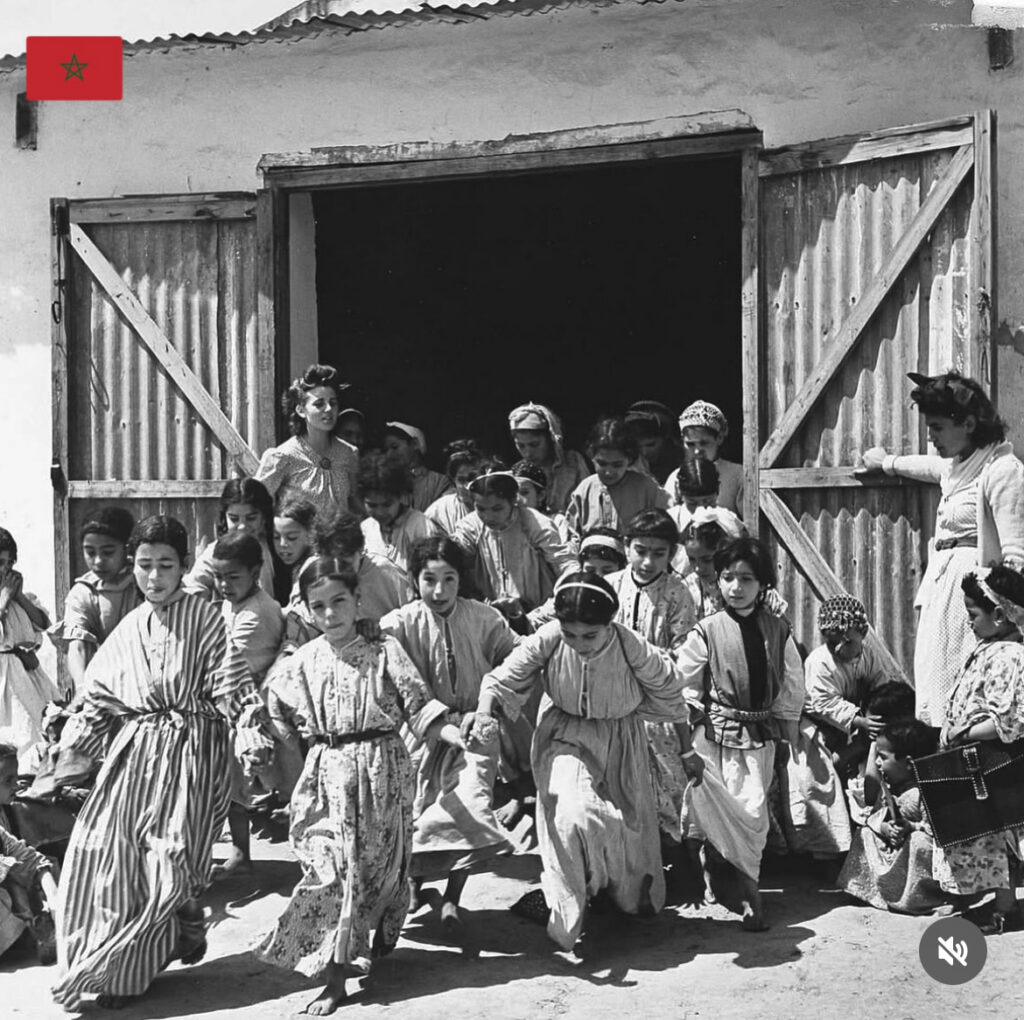
Education is compulsory in Morocco, but actual implementation and attendance often fall short of the laws. The country suffers from high dropout rates at various educational levels.
Some Recent Figures:
- Morocco witnesses nearly 280,000 students dropping out annually, with more than half of them leaving during middle school.
- In the 2022-2023 school year, the number of dropouts reached about 294,458, down from approximately 334,664 in 2021-2022.
- Among those who leave school, a significant number do not re-enroll. For example, in recent years, about 230,904 students who dropped out did not return.
Dropout is particularly common in rural areas, and among vulnerable or low-income communities. Girls are also disproportionately affected in certain contexts.
These figures reflect a tremendous loss—not only in opportunities for the children themselves but also in the human capital of Moroccan society.
Understanding the Challenges
To understand how books and literature can help, it’s useful to first grasp the challenges:
- Economic Hardship: Families may need children to work instead of attending school. Poverty also makes associated school costs (books, uniforms, transportation) a burden.
- Distance and Rural Access: Schools are far away, infrastructure is poor, and transportation is unavailable, especially in remote or mountainous areas.
- Quality and Relevance of Education: If students feel what they are learning is irrelevant, or if teaching conditions are poor, motivation decreases; many struggle with basic skills and fall behind.
- Social Issues: Early marriage, child labor, domestic responsibilities, or cultural expectations sometimes pull children out of school.
- Lack of Institutional Support: In many cases, there is limited remedial support, limited alternative/vocational pathways, or a lack of second-chance education options.
With all these challenges, it becomes clear that formal education as it is delivered may not be sufficient—or accessible—for many children. Therefore, alternatives and complementary educational pathways are extremely important.
How Children’s and Young Adult Literature Can Help
While children’s books, including young adult (YA) literature, are not merely entertainment: they are tools for knowledge, identity formation, critical thinking, and hope. Here’s how they can help:
- Self-Directed Learning: Books can provide content children miss when they drop out—basic literacy, numeracy, science, history, etc. Even if a child leaves school, they can continue self-education using books.
- Motivation, Inspiration, and Identity: YA and children’s literature often feature characters who struggle, grow, and overcome challenges. Young readers can see themselves in those stories, develop ambitions, and realize that other paths are possible.
- Safe Learning Spaces: Reading independently or in groups can provide a safe space to explore ideas, develop language skills, and interact with the world beyond one’s immediate environment.
- Support for Lifelong Learning and Vocational Skills: Many YA books address social issues, ethics, personal development, and life skills (financial literacy, civic awareness, health). These are crucial for youth who may enter the job market early or who need to cope in less formal educational settings.
- Preserving Culture and Fostering Inclusion: Books that directly address local issues or reflect the lived experiences of children in villages and remote areas provide recognition and boost self-esteem. This helps children feel seen, valued, and more likely to engage in learning.
Linking Book Access to Continuous Learning
Given the dropout numbers, making high-quality books available is one practical lever to help mitigate the damage. Here is how this link works, along with strategy suggestions:
- Community Libraries and Reading Rooms: Projects in Morocco are already doing this. For example, the Library Project in Morocco establishes libraries in underserved rural areas; small libraries in schools where students can borrow books or attend after-school reading clubs.
- Mobile Libraries / Book Collections: Providing “mobile” libraries or book collections for remote villages or families allows children who cannot attend school regularly to access books at home.
- Books in Accessible Formats: This includes books in local languages, audiobooks, large print, or materials for children with visual impairments.
- Young Adult Literature as a Bridge: YA books can help youth who have left school transition from informal learning to more advanced knowledge by being engaging and written in a relatable voice. They can promote reading habits, build vocabulary, critical literacy, and analytical thinking.
- Second-Chance Schools + Reading Support: Integrating reading programs into second-chance schools/vocational schools, or adult literacy programs. When students return, books and a reading culture help them catch up and stay motivated.
- Partnerships with NGOs, Publishers, Government Support: Scaling these efforts requires coordination: funding, donations, policies that encourage local publishing, illustration, translation, distribution, and programs that integrate reading and libraries into rural development, social inclusion, etc.
Challenges in Making Books Available and Necessary Actions
While the case for books is strong, actually getting them into the hands of children who have left school faces obstacles:
- Cost and Distribution: Printing, shipping, and maintaining books in remote or resource-poor areas is expensive.
- Relevance: Books must be culturally relevant, in languages children understand (Arabic), and reflect their reality. YA literature often originates in urban or foreign environments unrelated to Moroccan reality, especially rural life.
- Literacy Levels: Many children who drop out have weak literacy skills. Books must be at appropriate levels, with support to help them interact—this is where the role of youth workers is important.
- Motivation and Environment: If the home environment is unsupportive, or if children have to work or do family duties, merely having books may not be enough. Accompanying programs (reading groups, mentors, incentives) help.
To address these, possible steps include:
- Government policy to support reading programs (funding, curricula, mobile libraries).
- Initiatives from local publishers/authors, translation work, local themes.
- Support from international NGOs and philanthropic organizations.
- Training teachers and engaging community volunteers to promote reading.
- Using technology: e-books, audiobooks, mobile reading apps (while considering access to devices and the internet).
Conclusion
The dropout figures in Morocco are alarming: hundreds of thousands of students leave school each year, and many never return. But school education is not the only path for learning. If children’s books, especially those aimed at young adults, are made available, relevant, and engaging, they can play a transformative role: helping those who leave school to continue learning, develop critical thinking, maintain curiosity, and preserve their dignity.
Books cannot solve all the structural problems that lead to dropping out, but they offer a powerful tool in the broader strategy: a way to keep knowledge alive and hope burning, even when formal education is disrupted.
Key sources
- https://www.unicef.org/mena/media/6576/file/Morocco%20Country%20Report%20on%20OOSC_FR.pdf%20.pdf?utm_source=chatgpt.com
- https://www.enssup.gov.ma/storage/BILAN%20D%E2%80%99ACTIVITE%CC%81%20DU%20MINISTE%CC%80RE%202017-2021/BILAN%20D%E2%80%99ACTIVIT%C3%89%20DU%20MINIST%C3%88RE%202017-2021%20Vol.1%20-%20%C3%89ducation%20Nationale.pdf?utm_source=chatgpt.com
- News piece: “Baisse du décrochage scolaire en 2022-23 (Éducation nationale)” – reports that according to the Ministry the number of “décrocheurs” reached 334,664 in 2021-22. Médias24
- https://www.globalscientificjournal.com/researchpaper/La_d_perdition_scolaire_au_Maroc_causes_profondes_et_implications_politiques.pdf?utm_source=chatgpt.com
- https://mobile.ledesk.ma/encontinu/education-nationale-le-nombre-des-eleves-en-hausse-labandon-scolaire-en-baisse-de-12/?utm_source=chatgpt.com