
There is a particular kind of magic that lives in an independent bookshop. It is not the magic of algorithms or recommendation engines or carefully targeted advertising. It is something older and more human than any of that. It is the magic of a person who loves books, standing in a room full of books, ready to place exactly the right book into exactly the right pair of hands. And for a child, that moment can change everything.
In an age of online shopping, digital libraries and instant downloads, it would be easy to assume that the physical bookshop has become redundant. That it is a charming relic, a nostalgic indulgence, a luxury we can do without. Nothing could be further from the truth. For children’s reading culture in particular, the independent bookshop is not just useful. It is irreplaceable. And in Morocco, where that culture is still finding its feet, it may be one of the most important spaces we can nurture and protect.
The printed book as refuge
There is another, quieter reason the physical book and the independent bookshop matter more today than they have in years. Our children are growing up surrounded by screens — tablets, phones, televisions that flicker from morning to night. Their eyes, still developing, spend hours fixed on backlit displays, straining and drying under blue light that was never meant to be looked at for so long. In this context, the printed book has become something more than a cultural object. It has become a refuge. A page does not glow. It does not demand to be scrolled. It asks only to be turned, slowly, by a hand. Choosing a paper book over a screen is, quite literally, an act of rest for our eyes and an act of calm for our minds — a small daily decision to step out of the flood of notifications and into a quieter, slower, more human space. The bookshop, in this sense, is not competing with technology. It is offering an antidote to it.
The bookseller who knows your child
There is something an algorithm will never be able to do: look at a child, ask them a few questions, listen to what they say and what they don’t say, notice the way their eyes light up at one title and glaze over at another — and then reach for a book that is exactly right for who that particular child is, at this particular moment in their life.
A great independent bookseller does this every day. They carry in their head a vast and constantly updated map of books and readers, and they make connections between the two with an intuition that comes from years of loving both. They remember that the shy seven year old who came in last month loved a certain book, and they have been saving something for her ever since. They know that the restless boy who says he hates reading just hasn’t found his book yet — and they know exactly which one to try.
This is not a service. It is a relationship. And relationships, more than any other force, are what turn children into readers.
A space where books are alive
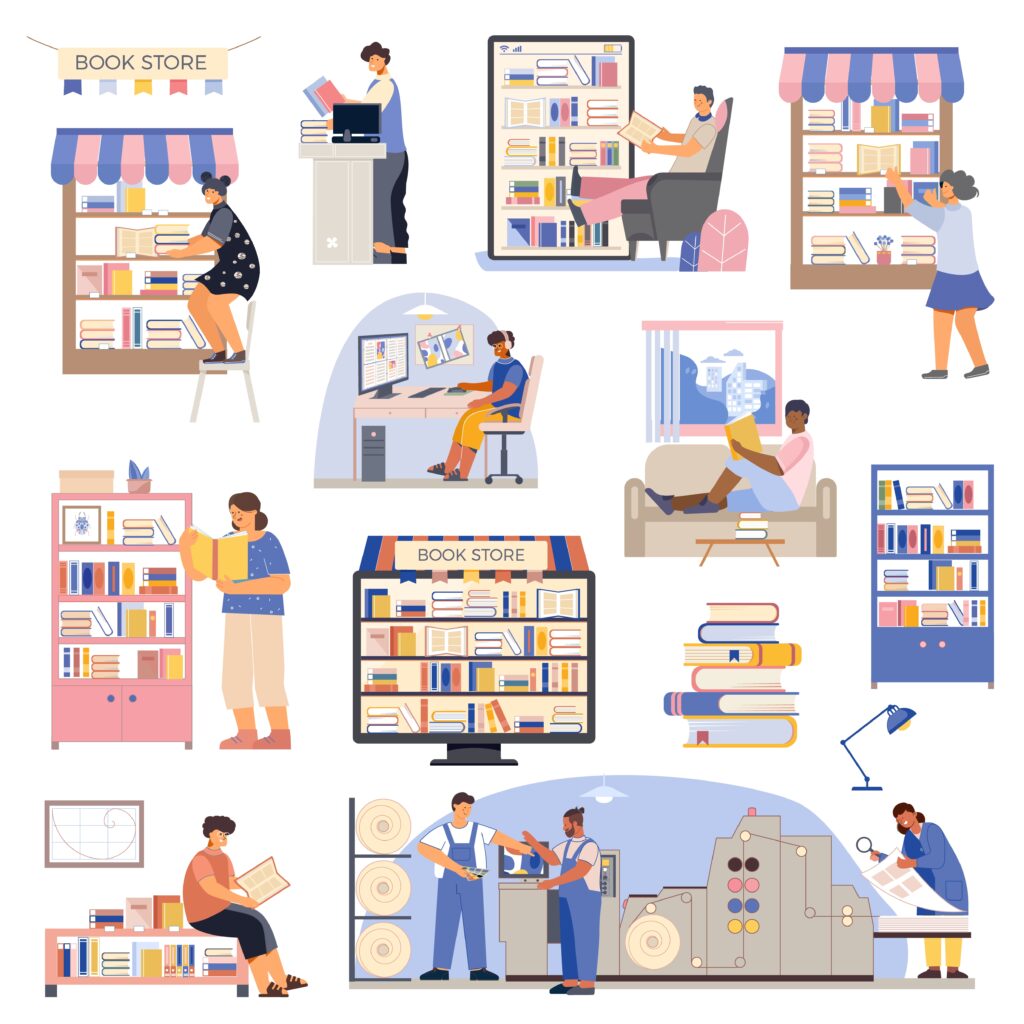
Walk into a well-loved independent children’s bookshop and you will notice something immediately: the books are not just products on a shelf. They are alive. They are faced out so you can see their covers. They are grouped in unexpected and inspired ways. There are handwritten notes from the booksellers — real human beings expressing real enthusiasm for specific books — tucked beside titles they particularly love. There are reading corners where children can sit and begin a book before they decide whether to take it home.
This environment teaches children something profound about books before they have read a single page: that books are treasures worth displaying, worth recommending, worth lingering over. That choosing a book deserves time and attention and care. That a bookshop is a place to be slow in, a place to wander and discover and be surprised.
In a world that trains children to consume quickly and move on, the independent bookshop teaches them to stop. To hold something in their hands. To wonder whether this might be the one.
The role of the bookshop in building a reading culture
A reading culture is not built by schools alone, or by publishers alone, or by parents alone. It is built by an ecosystem — a web of interconnected spaces, people and habits that together make books a natural and central part of daily life. The independent bookshop is one of the most vital nodes in that ecosystem.
It is the place where a child discovers that other children read — that books are not a solitary or unusual habit but something shared, something communal, something that connects them to others. It is the place where authors come to read aloud and suddenly become real, three-dimensional people rather than names on a cover. It is the place where a parent who is not sure what to buy can find guidance from someone who genuinely cares about getting it right.
It is, in short, the place where books become part of a community’s life rather than just a product in a transaction.
Morocco and the bookshop question
In Morocco, the landscape of independent children’s bookshops is still fragile. In many cities, a child and their parent have limited access to spaces dedicated to children’s books — spaces that are welcoming, knowledgeable, beautifully curated and genuinely committed to the pleasure of reading. This is not simply a commercial gap. It is a cultural one. Every city without a great independent children’s bookshop is a city where it is slightly harder for a child to fall in love with books.
This is why, at Agafay Books, we consider independent booksellers not as our distribution channel but as our partners and our allies. They share our belief that the right book in the right child’s hands is one of the most important things that can happen. They are on the front line of building the reading culture that Moroccan children deserve. And they deserve our full support, our deepest respect, and our most careful attention.
What you can do
If you are lucky enough to have an independent bookshop near you, go there. Take your child there not just to buy a book but to browse, to discover, to talk to the bookseller, to sit in the corner and read the first pages of something new. Make it a ritual. Make it something your child associates with pleasure and anticipation and the particular excitement of not knowing yet which book they will leave with.
Because the child who grows up going to bookshops does not just grow up loving books. They grow up understanding, in the deepest possible way, that stories matter. That the people who create them matter. That the spaces that celebrate them matter.
And that understanding, once given, is a gift that lasts a lifetime.