

When we choose a book for a child, we often ask ourselves: does this character resemble them? Will they be able to recognize themselves in this story? This concern rests on a deeply rooted belief in the world of children’s literature: the idea that children read better, understand better, and grow better when they see themselves reflected in the pages they turn.
But is this notion of “identification” as simple as it seems? And more importantly, is it sufficient to understand how and why children read?
What is Identification in Children’s Literature?
Identification is often described as the process by which a young reader recognizes themselves in a character, establishes emotional connections with them, and, through this connection, experiences the story in a more intense and personal way. Canadian critic Donna Norton describes it as “a process which requires emotional ties with the model; children believe they are like these models and their thoughts, feelings, and characteristics become similar to them.”
This vision suggests that the book becomes a mirror in which the child discovers, understands, and validates themselves. For many authors and publishers, this has become an essential criterion: a good children’s book must allow the young reader to find themselves in its pages.
Mirrors and Windows: Two Complementary Needs
Yet, if we dig a little deeper, we discover that identification cannot be the only mechanism at work in reading. British critic Robert Leeson raises an important question: although the child needs to recognize themselves in what they read, “it is also argued that the working-class child does not want only to read about itself” and likes to “escape into a different world… to escape and have vicarious pleasure and thrills.”
This observation leads us to a more nuanced understanding: children need both mirrors (books that reflect their own experience, their culture, their reality) and windows (books that open up worlds, lives, and possibilities they don’t yet know).
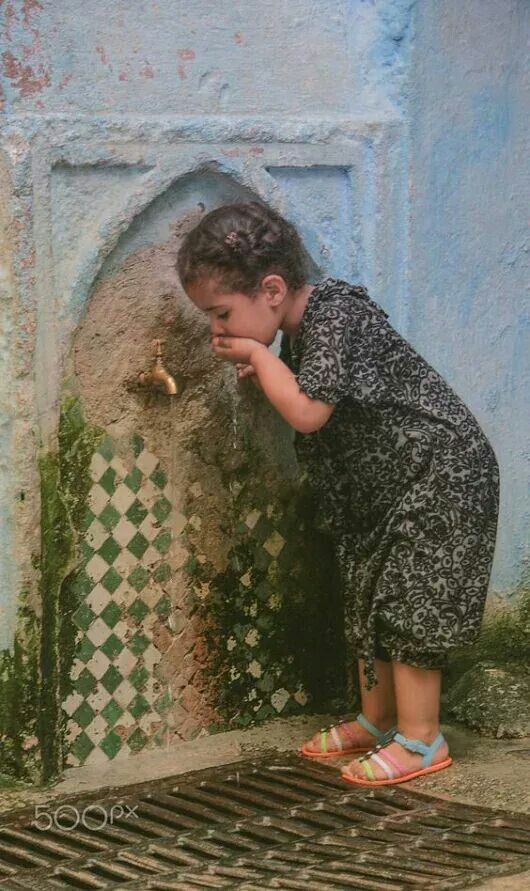
A Moroccan child can deeply recognize themselves in a story that takes place in their city, that speaks of their language, their family traditions. But this same child can also be transported by a story that takes place in another time, another place, with characters very different from them. Both experiences are valuable. Both contribute to their growth.
The Complexity of “Seeing Oneself” in a Book
But what does it really mean to “see oneself” in a book? Identification rests on the idea that there is a “child in the book” that the young reader will recognize as authentic, as “real.” Yet, fictional characters are never real children—they are constructions created by adults, filtered through the perspectives, values, and intentions of authors.
As British theorist Jacqueline Rose points out, “children’s fiction rests on the idea that there is a child who is simply there to be addressed and that speaking to it might be simple. It is an idea whose innocent generality covers up a multitude of sins.”
In other words: the child we imagine when we write is not necessarily the real child who will read the book. And the child in the book is not a transparent reflection of all children either—they are shaped by what the author thinks, hopes, or believes childhood to be.
Beyond Superficial Resemblance
This complexity becomes even more evident when we consider questions of cultural and social representation. American critics Judith Thompson and Gloria Woodard point out that “one limitation to [many] books is their emphasis on, identification with, and relevance only to middle class children. For too many black children, they depict an environment removed from their immediate experience.”
Identification therefore cannot be reduced to superficial resemblances—having a character who shares a child’s skin color, language, or nationality. True identification requires deep cultural authenticity: an intimate knowledge of social codes, family values, the tensions and joys that characterize a specific community.
For a book intended for young Moroccan girls about puberty and menstruation, for example, identification will not come simply from the fact that the character is Moroccan. It will come from how the story approaches the subject—with what cultural sensitivity, with what awareness of taboos and silences, with what warmth and honesty. It will come from the recognition that this book was written from within the culture, not as a lesson imported from outside.
What Identification Cannot Explain
Despite its importance, identification as a concept cannot explain the entire reading experience. It cannot account for:
- Learning the new: How do children discover realities, emotions, situations they have never experienced?
- Imagination and escape: Why do children love fantastic stories, magical worlds, characters who don’t resemble them at all?
- Empathy and understanding of others: How do books allow children to develop what D. W. Harding calls “imaginative insight into what another person may be feeling, and the contemplation of possible human experiences which we are not at that moment going through ourselves”?
The Delicate Balance: Familiarity and Discovery
So what should we remember for our work as authors, publishers, and purveyors of books?
Identification remains important—crucial, even—but it must be understood as one of many processes that occur during reading, not as the only one. Children need books that tell them: “You exist. Your world matters. Your experience is valid.” But they also need books that tell them: “There are other worlds. Other ways of living. Other possibilities for you.”
For us at Agafay Books, this means creating books that:
- Are rooted in cultural authenticity: Our stories must breathe the truth of Moroccan, Amazigh and Arab experience, written from within, with respect and intimate knowledge.
- Offer both mirrors and windows: We want young readers to recognize themselves in our characters, but also to discover new ways of thinking, feeling, and growing.
- Respect the complexity of young readers: Identification does not mean simplification. Children can identify with complex characters, nuanced emotions, difficult situations—as long as we approach them with honesty and gentleness.
- Leave space for imagination: The best book is not one that tells the child exactly what to think or feel, but one that invites them to explore, to question, to dream.
Conclusion: Beyond the Mirror
Yes, children need to see themselves in books. But they also need to see beyond themselves. They need books that welcome them as they are, while showing them who they could become. They need stories that resemble them and stories that surprise them.
Our role, as creators of children’s literature, is not simply to reflect the child—it is to accompany the child on their journey of discovery, both of themselves and of the world around them. Like a caring older sister, our books must be both familiar and revealing, reassuring and stimulating.
Because in the end, what children need most is not just to see themselves in a book—it is to feel understood, respected, and invited to grow.
At Agafay Books, we create books that celebrate cultural identity while opening horizons. Discover our ongoing projects and join us in this mission.